

About us
Sér Tækni and Nanoman
Sér Tækni ehf. sells Nanoman products in Iceland.
We import and sell products from Nanotech Products Pty Ltd in Australia, which makes nanotechnology-based coatings for stone, glass, textiles, metal and other materials.
The products repel water and dirt and make cleaning easier. We advise on choosing the right protection, deliver nationwide and hand over orders at Síðumúli 1.
Technical and safety data sheets for every product are open to everyone on the site.
Company information
- Company
- Sér Tækni ehf.
- Registration number
- 470126-2210
- Address
- Síðumúli 1, 108 Reykjavík, Iceland
- info@ser.is
- Phone
- +354 790 0505
- Manufacturer
- Nanotech Products Pty Ltd, Australia
The technology behind Nanoman
Nanotech Products in Australia develops coatings from silicon dioxide (SiO2) nanoparticles. When the coating is applied, the particles organise themselves into a very thin, invisible layer that bonds to the surface.
On smooth surfaces such as glass and metal, the layer fills microscopic unevenness and makes the surface smoother, so water and dirt find it harder to stick. On porous materials such as stone, timber and fabric, the particles coat the fibres and soak into the material, which can still breathe.
Every Nanoman product is made for one type of surface. That is why there are separate coatings for glass, stone, timber, fabric, metal and other materials.
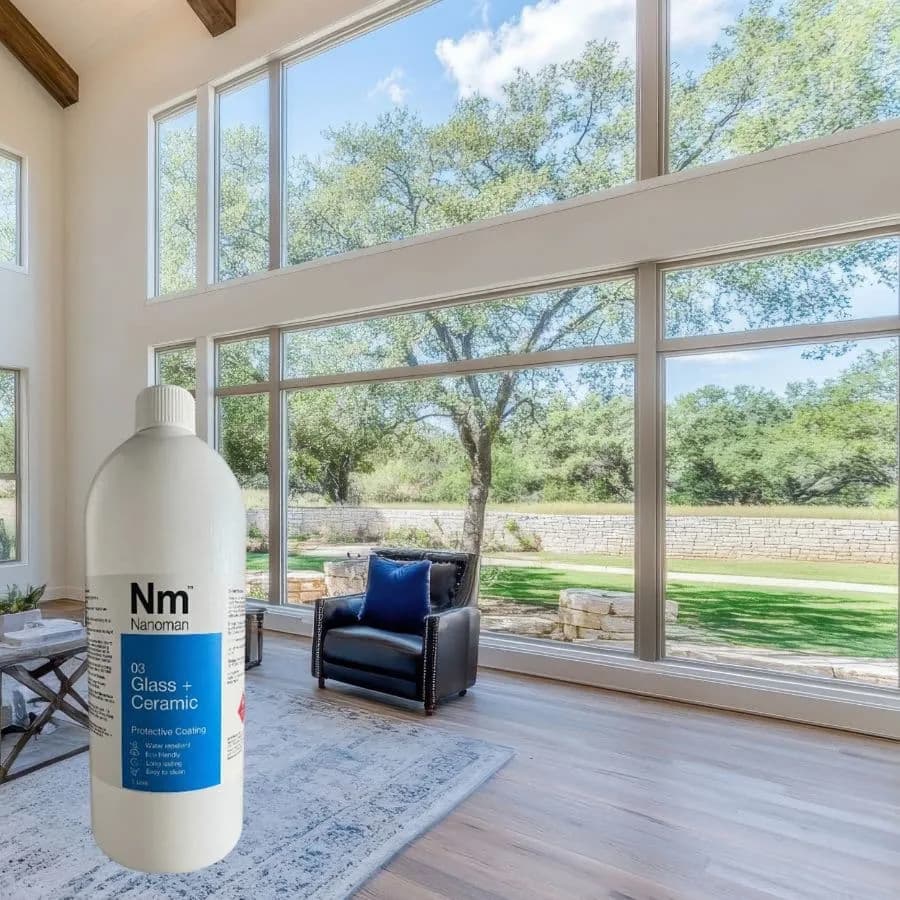
The technology
How Nanoman works
Nanoman coatings are made of tiny silicon dioxide (SiO2) particles, measured in nanometres. Each product is made for a particular surface.
 Untreated surfaceWater and dirt can soak into a surface that is not coated.
 Spray onThe coating is sprayed or wiped on. The particles organise themselves: one side bonds to the surface and the other faces outwards.
 Coated surfaceWhat remains is a very thin, invisible layer. Water beads on it, and dirt sits on top and is easier to wipe off.
On porous materials such as stone and timber, the particles also soak into the material, and the surface can still breathe.